Why We Keep Buying Solutions to Problems We Don't Actually Have
Sometimes the most tempting purchases aren't things we need. They're things that promise to turn us into the person we wish we were. The problem is that buying a solution and solving a problem are often two very different things.

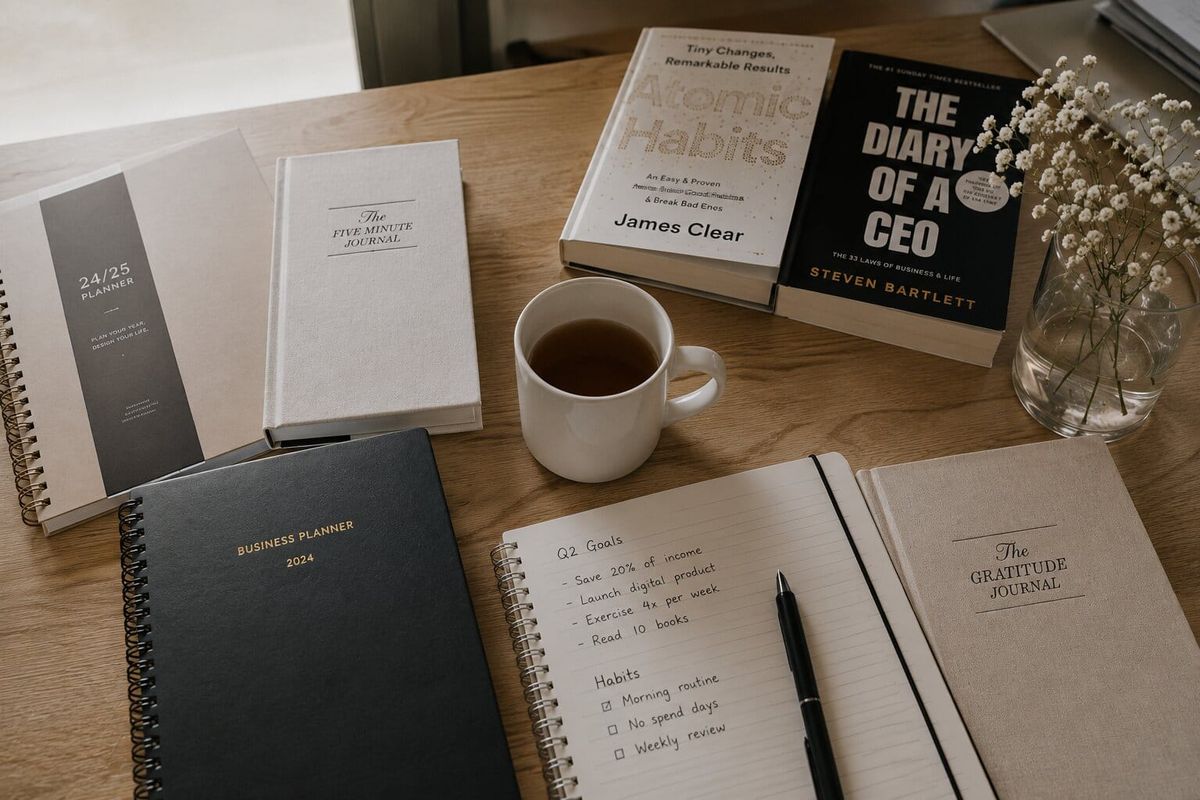
At one point, I owned four planners.
Not because I had four lives to organize.
Not because I was secretly running a multinational corporation from my tiny apartment.
Just four planners.
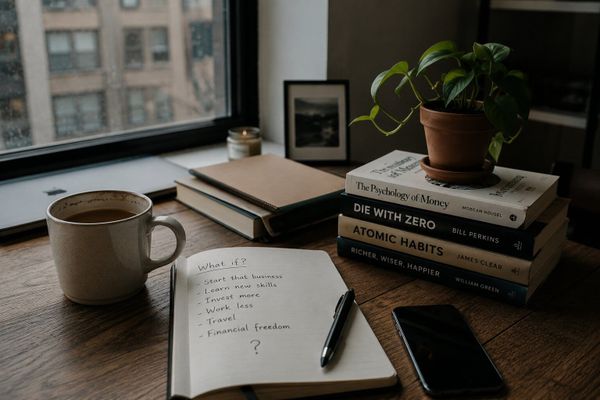
I also had a budgeting app I rarely opened, a growing collection of productivity books, and enough notebooks to suggest I was preparing to document a moon landing.
At the time, every purchase felt completely sensible.
Each one seemed to bring me a little closer to the person I wanted to become.
More organized.
More productive.
Better with money.
Eventually, I realized something slightly embarrassing.
I wasn't buying products. I was buying potential.
The Person We Hope To Become
One of the ideas that stayed with me from Barry Schwartz's The Paradox of Choice is that many of our decisions aren't really about what we need today. They're about the future version of ourselves we're quietly trying to become.
Once I started noticing that, I saw it everywhere.
People buy exercise equipment imagining a future athlete.
They buy expensive kitchen gadgets imagining a future chef.
They buy courses imagining a future entrepreneur.
And sometimes they buy planners imagining a future version of themselves who never forgets appointments and always remembers birthdays.
For a brief moment, the purchase lets us step into that identity.
The transformation itself, unfortunately, still requires a Tuesday afternoon and some actual effort.
When Preparation Starts Feeling Like Progress
I think this is why self-improvement purchases can feel so satisfying.
Buying a budgeting book feels financially responsible.
Downloading a habit tracker feels productive.
Ordering a new planner feels like getting your life together.
And sometimes those things genuinely help.
But I've noticed that preparation can occasionally give us a small emotional reward before we've actually changed anything.
Our brains love the feeling of a fresh start.
Consistency, meanwhile, tends to be much quieter.
A Question I Ask Myself Now
Whenever I'm tempted by a new tool, app, course, or productivity system, I try to ask one simple question: Have I fully used the version I already own? If the answer is no, the new purchase is often solving an emotional problem rather than a practical one.
The Surprisingly Boring Secret
One lesson I've learned over and over again is that lasting improvement rarely comes from finding the perfect system.
More often, it comes from sticking with an imperfect one.
The notebook you already own.
The budget you've already started.
The investment strategy you've already chosen.
The habit you're already trying to build.
None of these are particularly exciting.
But they work.
Increasingly, I've come to believe that boring solutions deserve a little more respect.
Many purchases promise a better future version of ourselves.
But the changes we're hoping for rarely arrive in the package. More often, they show up quietly through repetition, patience, and using what we already have long enough to let it work.