The biggest price you'll ever pay isn't losing money. It's never giving yourself the chance to earn more.
Discover why staying comfortable may be costing you more than you realize. Learn how small moments of discomfort can lead to greater financial freedom and long-term wealth.

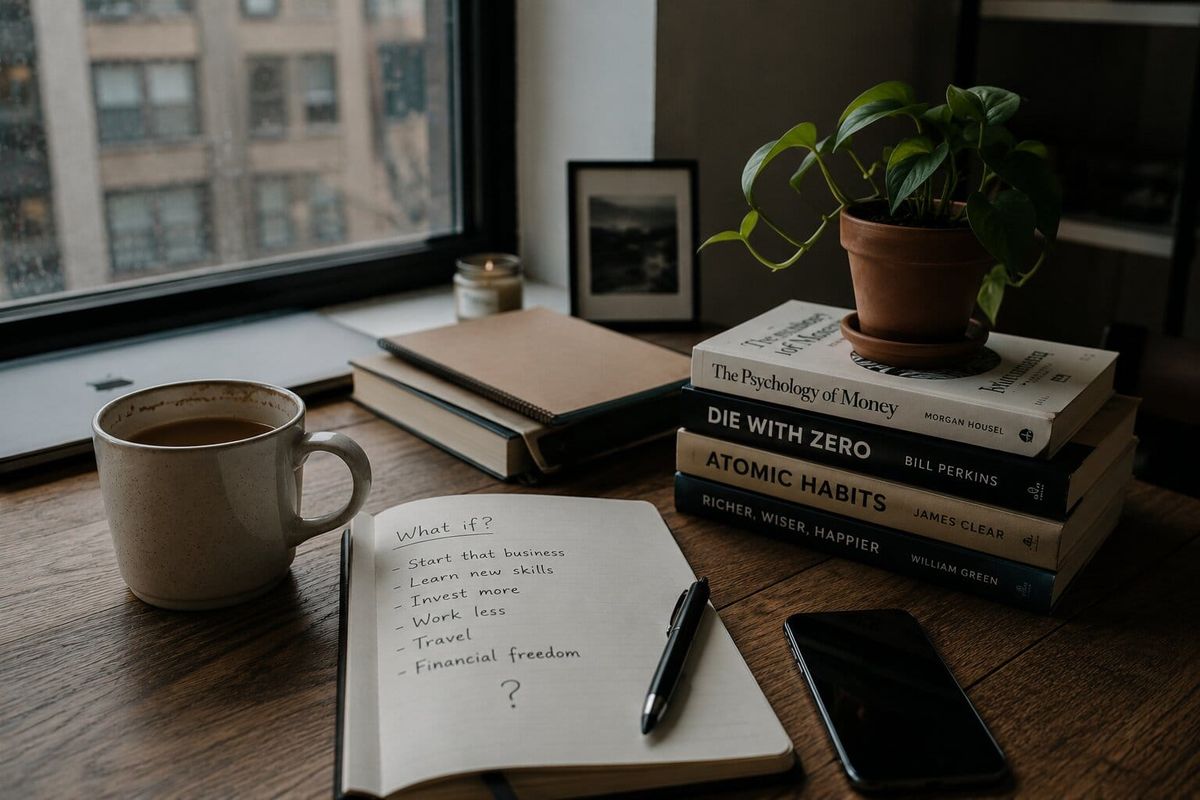
"I know I should probably look for something better."
A friend of mine has been saying that for years.
Not weeks. Not months. Years.
He doesn't enjoy his job. His salary has barely changed. He often talks about feeling stuck, yet every time a new opportunity appears, he finds a reason to stay exactly where he is.
"At least it's stable."
It's a sentence we've all heard—or perhaps even said ourselves.
On the surface, it sounds responsible. Stability feels mature. Predictable. Safe.
But one day I started wondering whether that feeling of comfort was quietly sending him a bill he couldn't even see.
Because comfort isn't always free.
Sometimes it's one of the most expensive choices we ever make.
The Price Tag We Never Notice
When people think about financial mistakes, they usually picture obvious ones.
- Buying something they couldn't afford.
- Making a bad investment.
- Accumulating credit card debt.
- Missing a payment.
Those mistakes have visible price tags.
The cost shows up on a bank statement.
Comfort is different.
Its cost rarely appears anywhere.
You don't receive a notification saying:
"You lost $12,000 this year because you never asked for a raise."
Or:
"You missed out on ten years of investment growth because opening an account felt overwhelming."
Or even:
"You stayed in a role that no longer challenged you, and your earning potential quietly stalled."
The bill still exists.
You just never receive it.
Our Brains Love Familiar
There's a reason comfort is so difficult to leave behind.
Our brains are designed to prefer what feels familiar.
Psychologists call this the status quo bias—our natural tendency to stick with what we already know, even when better alternatives are available.
We also experience something known as loss aversion. Research suggests that the pain of losing something often feels stronger than the satisfaction of gaining something of equal value.
That means we often overestimate the risks of change while underestimating the risks of standing still.
Ironically, avoiding short-term discomfort can create much bigger long-term consequences.
The Opportunities We Never Count
Imagine two people.
One loses $500 in a poor investment.
It hurts.
They remember it for years.
The other never invests at all.
There's no dramatic loss. No painful lesson. Nothing to regret—at least not immediately.
Yet over twenty years, the second person may miss out on tens of thousands of dollars in potential growth.
Which decision was actually more expensive?
It's a question we rarely ask because our minds focus on visible losses, not invisible opportunities.
The same pattern appears everywhere.
- Not negotiating a salary.
- Not applying for a better position.
- Not learning a valuable skill.
- Not starting the side project you've been thinking about for years.
- Not investing because you're waiting for the "perfect" moment.
Each individual decision feels harmless.
Together, they can shape an entirely different financial future.
Comfort Compounds, Too
We're often told that compound interest is one of the most powerful forces in personal finance.
That's true.
But comfort compounds as well.
Every time we say:
"I'll do it next month."
or
"Maybe after things calm down."
we strengthen a habit of postponing growth.
The delay feels small.
The pattern becomes enormous.
Years later, we may wonder why our financial situation hasn't changed much.
Often, it wasn't one big decision.
It was hundreds of tiny moments where comfort quietly won.
Discomfort Isn't the Enemy
This doesn't mean you should constantly chase risk.
Financial freedom isn't about gambling with your future or making reckless decisions.
It's about becoming comfortable with small amounts of productive discomfort.
That might look like:
- Having the awkward conversation about a raise.
- Opening an investment account for the first time.
- Taking an online course after work.
- Applying for a position you're not completely sure you're qualified for.
- Saying no to an unnecessary purchase so you can say yes to a future opportunity.
None of these actions feels exciting in the moment.
Most of them feel uncomfortable.
But that's often where progress begins.
A Question I Ask Myself
I've learned not to fear comfort.
Instead, I try to question it.
Whenever life feels wonderfully easy, I pause for a moment and ask myself:
Am I comfortable because I've built freedom… or because I've stopped growing?
The answer isn't always obvious.
But it's almost always worth exploring.