Why Some Purchases Make Us Happier Than Others
I've bought things that felt exciting for a week and experiences that still make me smile years later. It turns out there's actual psychology behind why some purchases create lasting happiness while others fade surprisingly quickly.

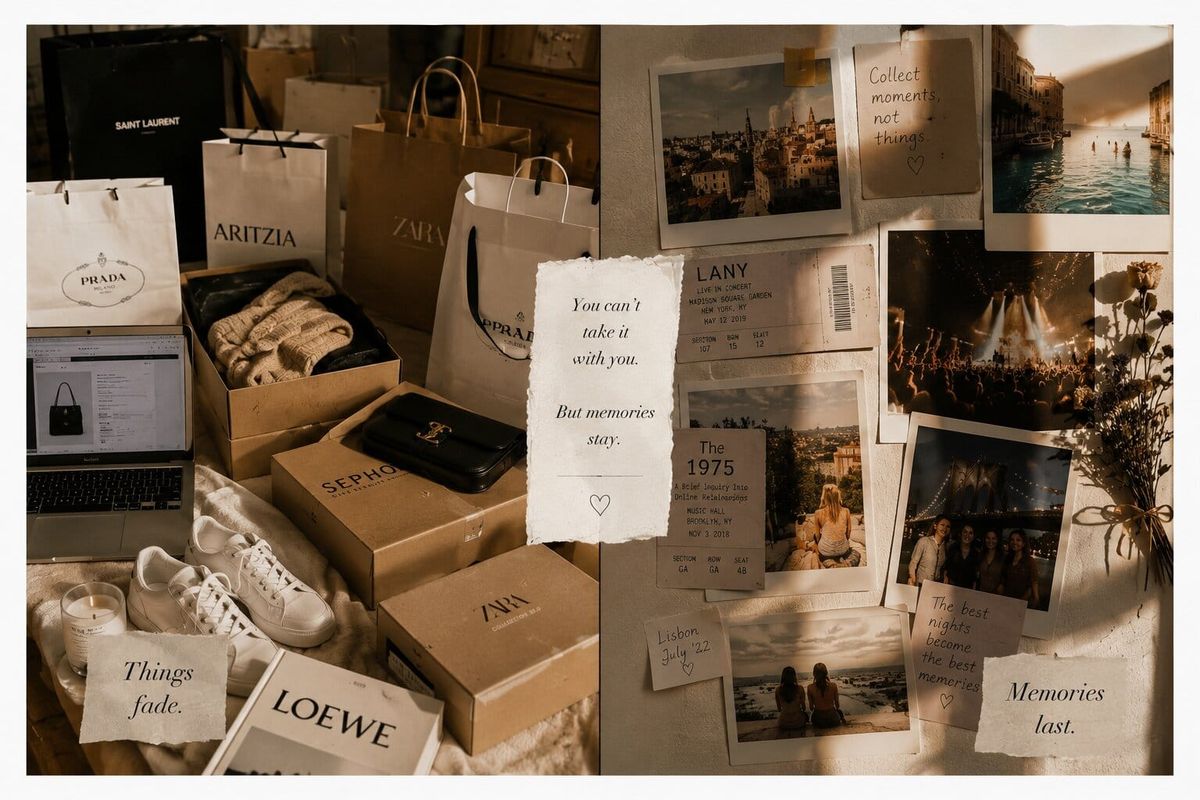
A few years ago, I bought a beautiful coffee machine.
Not a normal coffee machine.
The kind of coffee machine that arrives in a box large enough to suggest you've purchased industrial equipment.
I researched it for weeks. Compared reviews. Watched videos. Read articles written by people who seemed emotionally invested in coffee at a level I wasn't aware was possible.
When it finally arrived, I was thrilled.
For about two weeks.
Today, it sits quietly in my kitchen doing exactly what every coffee machine eventually does: becoming part of the background.
Around the same time, I spent roughly the same amount of money on a spontaneous weekend trip with friends.
Years later, I still think about that trip.
The conversations. The ridiculous photos. The memories.
And that made me wonder:
Why do some purchases create lasting happiness while others fade so quickly?
The Science of Happy Money
In Happy Money, researchers Elizabeth Dunn and Michael Norton argue that how we spend money often matters more than how much we spend. Certain types of purchases consistently create more lasting happiness than others.
That idea completely changed how I think about spending.
Because most of us focus on maximizing value.
The best deal.
The highest quality.
The most features.
But we rarely ask a much more important question:
Which purchase will actually make me happier six months from now?
Experiences Tend to Age Better Than Things
One of the most famous findings in happiness research is that experiences often create more lasting satisfaction than material possessions.
At first, that seems strange.
After all, possessions last longer.
A vacation ends.
A new laptop stays.
A concert lasts one night.
A designer handbag lasts years.
Yet experiences become woven into our identity in ways possessions often don't.
We tell stories about them.
We remember them.
We share them with other people.
And surprisingly, memories often improve with time.
My weekend trip has become better in memory than it was in reality.
The coffee machine has not enjoyed the same emotional appreciation.
The "Future Memory" Test
When considering discretionary spending, I sometimes ask: "Will this become a memory or just an object?" Not every purchase needs to create a lifelong story, but the question helps me distinguish between temporary excitement and lasting value.
The Problem With New Things
Psychologists call it hedonic adaptation.
Which is a fancy way of saying that humans get used to things remarkably quickly.
The new couch becomes the couch.
The new phone becomes the phone.
The upgraded apartment becomes home.
The excitement fades because our brains are designed to normalize improvements.
This isn't a flaw.
It's simply how human psychology works.
The danger is that many people respond by continuously chasing the next upgrade.
The next purchase.
The next delivery.
The next version.
Without realizing that the emotional cycle remains exactly the same.
The Happiest Purchases Often Involve People
One finding from Happy Money that I absolutely love is that spending money on social experiences tends to produce especially strong happiness returns.
Dinner with friends.
A weekend trip.
A class taken together.
A shared adventure.
Humans are social creatures.
Experiences become more meaningful when they're connected to relationships.
That's one reason I rarely regret spending money on quality time with people I care about.
I can't say the same for every online purchase I've ever made after 10 PM.
Spending With Intention
One thing this research changed for me is that I stopped thinking about spending purely in terms of cost.
Now I think more about emotional return on investment.
Not every dollar needs to be optimized.
But if I'm going to spend money, I'd rather spend it on things that create lasting value.
That might mean:
- Experiences instead of upgrades
- Memories instead of status symbols
- Time with people instead of more possessions
- Learning something new instead of buying something new
- Quality over quantity
Ironically, this approach hasn't necessarily made me spend less.
It's made me spend more intentionally.
And that's a very different thing.
The goal isn't to spend less money. It's to get more happiness from the money you spend.
The happiest purchases are often the ones that create memories, strengthen relationships, and become part of your story long after the credit card charge is forgotten.