The Scarcity Mindset Can Make You Worse With Money
Financial stress doesn’t just affect your bank account. It affects your attention, decision-making, patience, and emotional control — often in ways people don’t even realize.


There was a period of my life when I thought about money constantly.
Not in a glamorous “future millionaire” kind of way. More in a “mentally calculating grocery totals while standing in line” kind of way.
I told myself I was being responsible. Careful. Financially aware.
But eventually I realized something uncomfortable: the more stressed I became about money, the worse my financial decisions actually got.
That realization made much more sense after reading Scarcity by Sendhil Mullainathan and Eldar Shafir — one of the most fascinating books I’ve ever read about human behavior.
Scarcity Changes How Your Brain Functions
The authors explain that scarcity — whether related to money, time, or stress — consumes mental bandwidth. When your brain becomes preoccupied with “not having enough,” your ability to think clearly about long-term decisions decreases.
In other words: financial stress doesn’t just feel bad emotionally. It can actively reduce cognitive performance.
That explains why people under financial pressure often make decisions that seem irrational from the outside.
Because when your brain is overwhelmed, survival starts replacing strategy.
The Tunnel Effect
One concept from the book that stayed with me is something called tunneling.
When people experience scarcity, they become hyper-focused on immediate problems while losing sight of bigger-picture thinking.
I recognized this instantly in my own life.
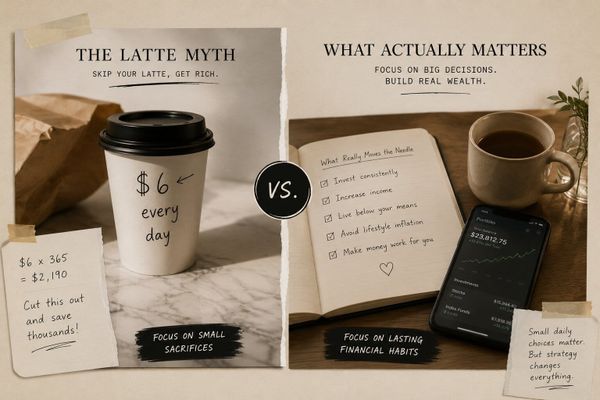
There were months when I obsessed over tiny daily expenses while completely ignoring larger patterns affecting my finances:
- Emotional spending after stressful days
- Subscriptions I never used
- Irregular impulse purchases
- Constant convenience spending from exhaustion
Ironically, the harder I tried to tightly control every dollar, the more emotionally reactive I became around money.
Scarcity had narrowed my thinking.
The “Calm Finance” Rule
One thing that helped me enormously was separating financial awareness from financial panic. I started creating systems that reduced daily money stress: automatic transfers, weekly check-ins instead of constant monitoring, and simpler budgeting categories that didn’t require emotional negotiations every time I bought toothpaste.
It sounds small, but reducing financial anxiety restored an incredible amount of mental energy.
Why “I Deserve This” Spending Happens
One of the strangest things about financial stress is how often it creates rebound spending.
After periods of intense restriction, people frequently seek emotional relief through spending.
I used to do this constantly without realizing it.
I’d spend days being hyper-frugal, mentally exhausted from overthinking every purchase, and then suddenly order expensive takeout while whispering, “Honestly, I deserve this.”
Which, to be fair, sometimes I did. But the pattern itself wasn’t healthy.
The problem wasn’t occasional treats. The problem was swinging between restriction and emotional release.
That cycle creates instability — financially and psychologically.
Financial Stability Is Emotional Too
A lot of financial advice focuses entirely on numbers, but emotional stability matters just as much.
People make better long-term decisions when they feel safe enough to think long-term.
That’s why my approach to saving changed dramatically over time. I stopped trying to create perfect budgets and started trying to create calmer systems.
- A small emergency fund for psychological relief
- Automatic savings instead of constant manual decisions
- Clear spending categories without guilt
- Reducing unnecessary financial complexity
- Allowing reasonable enjoyment without shame
Oddly enough, my finances improved significantly once money stopped dominating my thoughts every hour of the day.
Because scarcity doesn’t just drain bank accounts.
It drains attention, patience, emotional energy, and decision-making capacity too.
Sometimes the healthiest financial decision isn’t becoming stricter.
Sometimes it’s creating enough stability, simplicity, and breathing room that your brain can finally stop operating in survival mode.