The Latte Factor Is Bigger Than Coffee
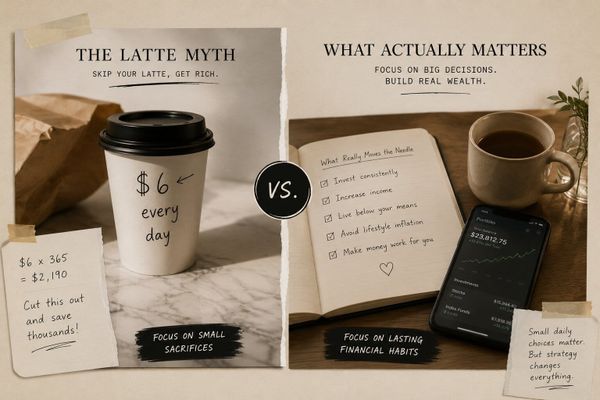
Most people misunderstand the Latte Factor. It’s not about guilt over coffee — it’s about noticing the tiny financial habits that quietly shape your entire life.


I live in New York, which means I could accidentally spend $38 before noon without even realizing it. A coffee here, a delivery fee there, a “quick” pharmacy stop that somehow turns into skincare, sparkling water, and a candle I absolutely did not need.
For years, I rolled my eyes at the famous “Latte Factor” idea popularized by David Bach in The Automatic Millionaire. Like many people, I thought it sounded simplistic and slightly annoying. Nobody becomes poor because they bought a cappuccino.
But eventually, I realized the point was never really about coffee.
The Real Meaning Behind the Latte Factor
The Latte Factor is about unconscious spending — the tiny financial leaks we stop noticing because they feel normal.
David Bach argued that small repeated purchases matter because repetition compounds. Not financially at first — psychologically.
Modern spending is frictionless. Apps remove pauses. Subscriptions renew quietly. Food arrives before you even have time to reconsider whether you were actually hungry.
That’s where the danger starts.
The “Tiny Leak” Problem
I once tracked every unnecessary purchase for two weeks. Not groceries. Not rent. Just invisible spending.
- $11 delivery fee because I “didn’t feel like cooking”
- $7 matcha because I was stressed
- $14 impulse Amazon purchase at 1 AM
- Three forgotten subscriptions I barely used
None of these purchases were catastrophic individually. Together? They represented hundreds of dollars each month spent almost entirely on emotional convenience.
That realization changed the way I think about money.
What I Changed
I stopped trying to “be disciplined” and instead made my spending more visible. I removed saved credit cards from apps. I unsubscribed aggressively. I started making tea at home before deciding whether I still wanted café coffee.
Interestingly, the less automatic my spending became, the less deprived I felt.
Because the goal was never to eliminate joy. The goal was to stop leaking money into habits that weren’t actually improving my life.
The Psychology Nobody Talks About
Tiny purchases are emotionally sneaky because they don’t trigger fear. A $6 coffee doesn’t feel financially important. But repeated behavior shapes identity.
When spending becomes automatic, awareness disappears. And awareness is usually the first step toward financial stability.
Now, every Sunday, I do what I call a “money leak audit.” I look for spending that added convenience without adding actual happiness.
Honestly? That tiny habit probably improved my finances more than any budgeting spreadsheet ever did.
The Latte Factor isn’t really about saving money on coffee.
It’s about noticing where your life is running on autopilot — and deciding whether that autopilot is taking you somewhere you actually want to go.