Emotional Spending Isn’t Really About Money
Most emotional spending has very little to do with the actual object being purchased. More often, people are buying relief, comfort, distraction, identity, or temporary emotional control.


I once bought an unnecessarily expensive candle after a stressful week because, apparently, my brain believed lavender could solve emotional exhaustion.
To be fair, it smelled incredible.
But the interesting part wasn’t the candle itself. It was the reason I wanted it so badly.
I wasn’t shopping because I needed something. I was shopping because I wanted emotional relief.
That realization changed the way I think about money entirely.
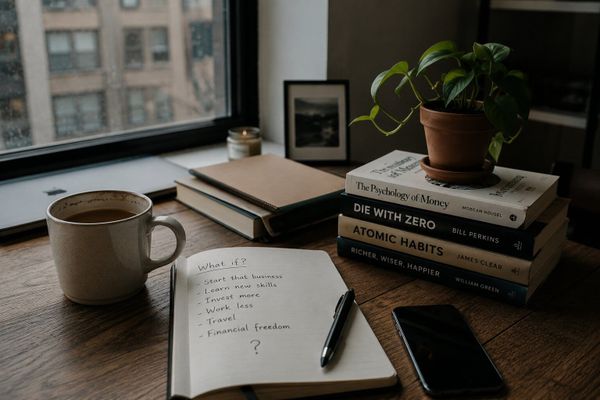
In The Psychology of Money, Morgan Housel repeatedly emphasizes that financial decisions are deeply emotional. People like to imagine money as rational and mathematical, but most real-world spending behavior is connected to stress, identity, fear, boredom, insecurity, loneliness, or reward.
And honestly, once I understood that, my spending habits suddenly made much more sense.
Spending Often Functions as Emotional Regulation
Psychologists have found that people frequently use spending to temporarily regulate emotional states. Buying something new can create a short burst of control, excitement, comfort, or relief — especially during stressful periods.
That emotional reward is powerful because it happens immediately.
The package arrives. Dopamine appears. Life feels slightly shinier for approximately seven minutes.
Then the emotional state returns, which is why emotional spending often becomes repetitive.
The “I Deserve This” Spiral
One of the biggest emotional spending triggers for me used to be stress combined with exhaustion.
After difficult workdays, my brain would suddenly transform ordinary purchases into emotional rewards:
- Expensive takeout because I “earned it”
- Late-night online shopping because the week was hard
- Tiny impulse purchases to improve my mood
- Convenience spending because I felt mentally depleted
None of these decisions felt irrational in the moment.
That’s the difficult thing about emotional spending: emotionally, it often feels completely justified.
And sometimes it genuinely is okay to comfort yourself. Humans are not robots. A peaceful café moment or takeout dinner after a terrible day isn’t financial failure.
The problem starts when spending becomes your primary coping mechanism.
The “Pause and Name It” Habit
One practice that helped me enormously was learning to identify the emotion before making the purchase. Instead of immediately buying something, I pause and ask: “What am I actually feeling right now?” Stress? Loneliness? Boredom? Exhaustion? Surprisingly often, the urge to spend weakens once the emotion becomes visible.
Awareness interrupts autopilot.
Why Budgeting Advice Often Fails
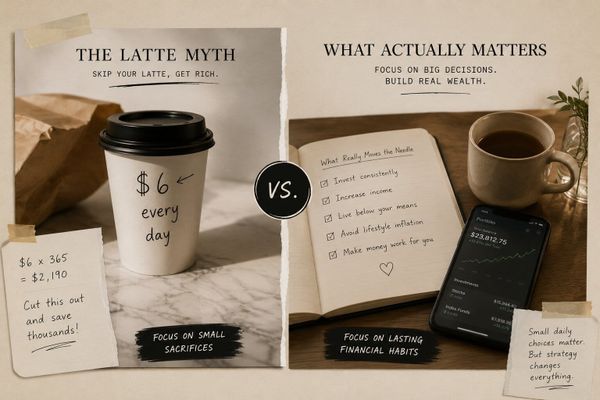
A lot of financial advice treats spending like a pure discipline problem.
Make stricter rules. Cut more expenses. Try harder.
But emotional spending usually isn’t caused by mathematical confusion. It’s caused by emotional overload.
That’s why people can understand budgeting perfectly and still overspend during stressful periods.
Their emotional systems are exhausted.
Honestly, my finances improved more once I focused on emotional stability than when I obsessed over optimization.
More sleep. Less burnout. Simpler routines. Better boundaries around stress.
Those things affected my spending more than complicated spreadsheets ever did.
Replacing the Spending Ritual
One of the most useful things I learned was that emotional spending often follows predictable rituals.
For me, it usually happened late at night after stressful days while scrolling online.
Once I recognized the pattern, I started experimenting with replacement rituals instead:
- Making tea before opening shopping apps
- Going for walks instead of stress-ordering food
- Writing thoughts down before buying things
- Watching comfort shows without multitasking online
- Creating small non-financial rewards after difficult weeks
The goal wasn’t eliminating enjoyment.
The goal was separating emotional care from automatic spending.
You Can’t Shame Yourself Into Financial Peace
I used to think being harsh with myself would improve my financial habits.
In reality, shame usually made emotional spending worse.
Because emotionally overwhelmed people rarely become calmer through self-criticism.
What actually helped was curiosity.
Why do I want this right now? What feeling am I trying to create? What problem do I think this purchase will solve?
Those questions changed my relationship with spending more than guilt ever did.
Most emotional spending isn’t about objects.
It’s about stress, comfort, identity, relief, and emotional survival. Understanding that doesn’t just improve finances — it improves self-awareness too.